
Checking for a Warrant in Royal Center
Begin with Indiana MyCase. Type a cause number or citation number if a court paper shows one. No number? Search by last name, then narrow things down with a first name, middle name, date of birth, Cass court, or case type. MyCase searches public court cases across Indiana. It is not a dedicated Royal Center warrant list, so a case result by itself does not prove an active warrant.
- Search the exact cause or citation number in MyCase.
- Read recent events for warrant, failure to appear, service, return, recall, bond, or hearing terms.
- Call the Cass County Clerk at (574) 753-7740 and name the assigned court.
- Ask that court what action, appearance, or bond term applies.
- Use the Marshal or Sheriff only for service, execution, or jail routing questions.
A blank result only means no public case matched those inputs in Royal Center. Older data, restricted records, and spelling slips can hide a match, so recheck the name and numbers, then ask the clerk of the controlling court directly.
Royal Center Warrant Roster Gap
Royal Center publishes no searchable warrant roster. Its official pages carry no name fields, status filters, update dates, municipal court calendars, or amnesty terms. That gap limits access; it does not mean no judicial order exists.
Quick answer: Royal Center warrant status comes from MyCase and the assigned Cass court, not from a town list.
MyCase shows public docket events for a case. The Clerk can tell you which court controls it. The Marshal may know whether town officers received or served process on a Royal Center matter. But only the court can confirm that an order was recalled, quashed, vacated, or closed.
Royal Center Police and Municipal Court
Royal Center's official departments page lists its Police Department and Town Marshal. The Indiana Judicial Branch directory shows no separate Royal Center municipal court. Criminal, traffic, and ordinance matters that become cases route through Cass County Circuit Court or Superior Courts I and II. The Cass County Clerk keeps those records.
Town Marshal
Call (574) 643-2232 for non-emergency agency routing or a question about local service. Call 911 only for an emergency.
Cass court system
Use the assigned court for issuance, bond, hearing, recall, and final status. The Marshal cannot change a court order.
A marshal and a judge hold different jobs. Royal Center officers may execute lawful process, while the issuing judge controls the warrant and the case behind it.
Royal Center Town Warrant Contact
The official Royal Center town page lists Town Hall at 104 East Street as a contact point. It covers town government and community matters. It is not a substitute for a Cass court record.
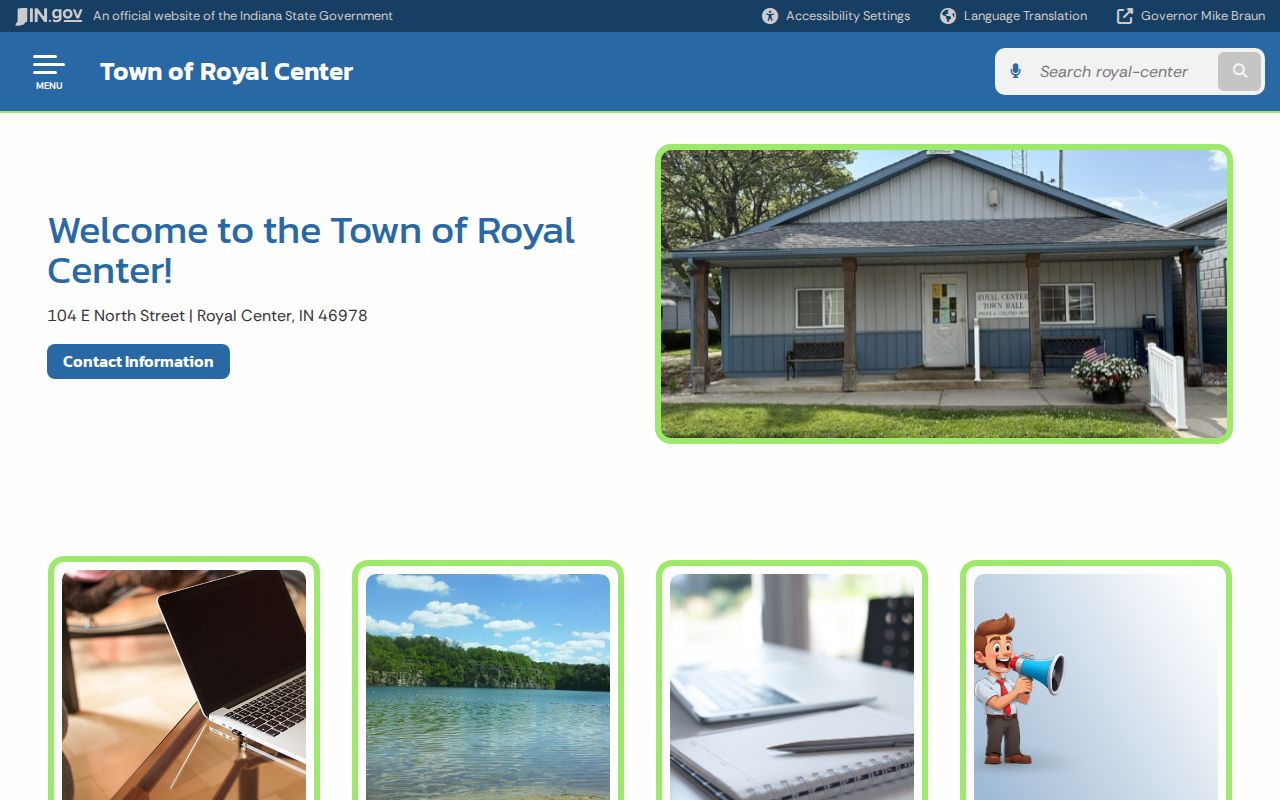
Town Hall can help when you need a town-held ordinance or administrative record. If a citation became a case, take its number to MyCase and the Cass County Clerk. A phone call there beats a drive. The judicial record stays with the assigned Cass court even when the incident began inside Royal Center. Local contacts and county justice offices simply answer different questions, and knowing which is which saves time. The court, not the town, holds the file.
Royal Center Warrant Types
People in Royal Center can run into several kinds of process. Each one grows out of a judicial case, not a town warrant portal. Match the type to the newest court event before acting.
| Warrant type | Record clue | Controlling authority |
|---|---|---|
| Arrest warrant | Charge and probable-cause entries | Assigned Cass judge |
| Bench or FTA warrant | Missed setting or breach of an order | Issuing Cass court |
| Traffic FTA warrant | Citation, missed date, and possible BMV notice | Court first, BMV record second |
| Probation-violation warrant | Alleged supervision violation in the original case | Original criminal court |
An arrest warrant commands an arrest for an alleged offense. A bench warrant, often tied to failure to appear, follows a missed required court event. Recall means the issuing court withdrew the order, and service by an officer alone does not erase the underlying case.
Royal Center Marshal Warrant Role
The official departments page names the Town Marshal and lists (574) 643-2232. Emergencies go to 911. That non-emergency line is the sensible Royal Center route for an agency record or service question.
Give the marshal a cause number and court name when you have them. Do not ask town staff to rule on whether a docket entry is legally active. That call belongs to the Clerk and the judge's court. The department confirms service; it does not confirm status. Use 911 only for immediate danger, never for a routine Royal Center record check. Keep the line between service and judicial control clear, and you will not waste a call.
Inside a Royal Center Warrant Record
A public docket in MyCase may list a warrant as an event without showing the signed document itself. Read each field in context. Indiana law shapes what appears in a Royal Center case file.
| Cause or citation number | The main lookup key, such as 09D02-YY-XX-#####. |
|---|---|
| Issuing court | Cass Circuit Court, Superior Court I, or Superior Court II. |
| Reason or charge | The alleged offense, missed event, or order violation. |
| Dates | Issue, service, return, hearing, or recall dates when public. |
| Bail or conditions | Terms set by the judge, if any and if publicly shown. |
| Status history | Entries such as issued, served, returned, recalled, quashed, or vacated. |
Any stamped number is just a format example. An old warrant entry in a Royal Center docket can stay visible after later action. The most recent controlling order is what matters.
Resolve Royal Center Warrants
No caller can recall a Royal Center warrant, and the Marshal cannot edit a docket. Paying an unknown caller accomplishes nothing. Call the Clerk, identify the assigned court, and ask what the judge requires. The answer might be an appearance, a motion, an attorney-arranged hearing, bond, or a court-approved payment. Cass County publishes no single local process that fits every case.
- Confirm the cause number and issuing court.
- Ask whether the warrant is still active.
- Get the exact appearance, filing, bond, or payment direction.
- Complete only the court-approved step.
- Check the docket again and ask when execution records will update.
Cass County posts no Royal Center bond schedule, same-day recall promise, or stand-alone surrender window. A PayGov receipt for an eligible cost is not a recall order. Only court confirmation closes the question.
How Royal Center Warrants Fit the County System
Royal Center has no court of its own. A Cass Circuit or Superior Court judge issues and controls any warrant, the Clerk keeps the docket, and the Town Marshal or Sheriff can execute it. Booking happens at the jail. MyCase opens statewide case records to the public, but Indiana posts no single statewide warrant list. For the countywide picture, see the Cass County warrant records route.
Warrant flow: Royal Center incident or citation › assigned Cass court › Cass County Clerk › Marshal or Sheriff execution
That division of labor matters when you call. The Marshal can tell you about service and booking; only the court can tell you the warrant's current status. A docket may update before an agency record does.
Royal Center Warrant Fee Limits
No official Royal Center page lists a warrant-search fee, bond amount, amnesty charge, certified-copy price, or recall fee. So don't borrow numbers from another town. Don't treat a vendor's generic service fee as the sum due either. Ask the Clerk what charge applies to the exact record or filing. Ask the court which payment methods it approves. Cass County says PayGov accepts some traffic, ordinance, criminal, and civil costs for a nominal service fee, but that payment link is not a warrant search and cannot decide status. If you need a public copy, state the cause number, court, date range, and the exact issuance, service, or recall entry. Cass County's public-information landing page promises no fixed response time and quotes no warrant-record fee. A narrow request helps the office locate the right item without pulling unrelated files. Keep every cost in its own category. A copying charge pays for a copy. A service fee goes to the payment vendor. Bond, a fine, court costs, and a filing charge serve different purposes and may not all apply. Royal Center makes no official promise that payment alone lifts a warrant. Before sending money, ask the assigned court for the current balance, the approved method, and what payment will actually do. Then look for the judicial entry recording the judge's action. A receipt proves a transaction. It does not prove a recall.
Royal Center Warrant Records and Public Access
Access depends on the record and who holds it. Court files follow Indiana's court-access rules. Town or law-enforcement records may fall under APRA, with exemptions. Sealed, juvenile, expunged, pre-service, investigatory, protected, and safety-sensitive material may be withheld or redacted.
Key access rules:
Indiana Access to Public Records Act, Indiana Code 5-14-3 governs agency requests and lawful exemptions.
Indiana Rules on Access to Court Records govern public and excluded court material.
MyCase access guidance explains when public documents may still be available from the Clerk.
APRA does not override a court seal or confidentiality law. When a county agency record is not online, Cass accepts requests through its Public Information Request route by email or at the Auditor's Office.
Verify Royal Center Warrant Status
Read the full chronology before drawing conclusions. An old issued entry may be followed by service, return, recall, quash, or vacation. Quash means the court nullifies the warrant; vacate means it sets aside an order. Similar names demand care, so match the court, cause number, case type, and dates. Ask the Clerk to identify the latest public order. Then ask the assigned court what comes next. If your concern is service or booking, call the Marshal or Sheriff only after the judicial status is clear. The Sheriff's administration and jail route is (574) 753-7800, and (574) 722-6060 is also published as a non-emergency county route. Some documents sit only at the Clerk counter or behind party access. An access code may give a party more records in that person's own case, but it does not change the warrant. Where a record is restricted, ask the Clerk what lawful party or attorney procedure applies. Keep notes from every official call. Record the date, office, cause number, and the exact status term used. If one office reports a recall while another still shows an execution record, ask the issuing court when its order was entered and transmitted. Then ask the Marshal or Sheriff whether the update has reached the agency record. That will not settle a legal dispute. It does give each office the same identifiers and separates a timing delay from a true conflict. Never assume a spoken answer from an unrelated office overrides the current judicial entry. When offices in Royal Center disagree, the court's docket controls.